West Suffolk Villages: Your Guide to Living Near Bury St Edmunds
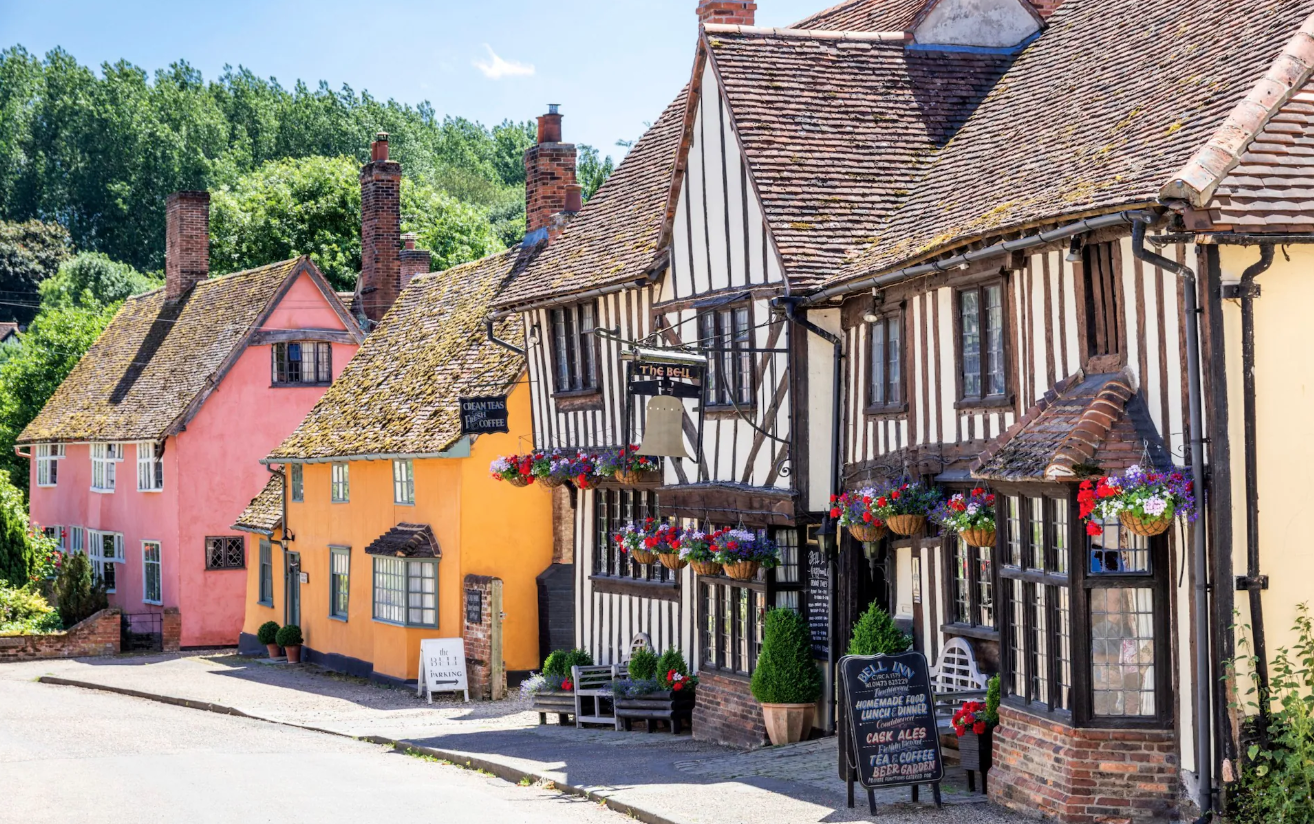
The Finest Villages Around Bury St Edmunds: A Guide to West Suffolk's Most Desirable Places to Live
Thinking of moving to the Suffolk countryside? Whether you're a family searching for excellent schools, a commuter craving open space, or someone simply ready for a slower, richer pace of life, the villages surrounding Bury St Edmunds offer something genuinely special. This guide explores fifteen of West Suffolk's most sought-after villages — covering their history, character, amenities, transport links, schools, property styles and the kinds of people who tend to fall in love with them.
Why Village Living Around Bury St Edmunds Is So Popular
There's a reason people who move to the villages around Bury St Edmunds rarely leave. West Suffolk has quietly built a reputation as one of the most liveable corners of England — combining the cultural richness of a historic market town with the peace, space and community warmth of genuine rural life.
Bury St Edmunds itself is consistently ranked among the best places to live in the UK, and its surrounding villages benefit enormously from that proximity. Residents enjoy access to an independent high street, excellent restaurants, a thriving arts scene and strong retail — all within a short drive — while returning home each evening to birdsong, footpaths, and the kind of neighbourly community that is increasingly rare to find.
Here's what draws people to village life in this part of Suffolk:
Quality of life — lower traffic, cleaner air, more green space, and a genuine sense of calm
Strong communities — village halls, parish councils, local fêtes, sports clubs and WhatsApp groups that actually work
Outstanding schools — both state and independent options, many rated Good or Outstanding by Ofsted
Safety — Suffolk consistently records some of the lowest crime rates in England
Countryside access — the Lark Valley, the Stour Valley, Breckland heathland and the Gipping Valley are all within easy reach
Pubs and independent businesses — many villages retain a working pub, a farm shop, or a community-run post office
Property value — village homes in West Suffolk have shown strong, consistent demand and long-term capital resilience
Whether you're relocating from London, upsizing from Bury town itself, or returning to Suffolk after years away, the villages in this guide deserve your full attention.
Transport Links and Connectivity
One of the most common concerns for those considering a village move is connectivity — and West Suffolk answers that concern convincingly.
The A14 is the region's arterial road, running east–west through the heart of Suffolk and connecting Bury St Edmunds to Cambridge (approximately 30 miles west), Ipswich (approximately 26 miles east), and onward to the M11 and A12. For commuters, this single road opens up a wide employment corridor.
Newmarket is roughly 15 miles to the west, Stowmarket approximately 12 miles to the east, and Norwich is reachable within an hour by road.
For rail travellers, two stations serve the village belt particularly well:
Thurston Station — on the Ipswich to Cambridge line, offering regular services into Bury St Edmunds (approximately 8 minutes), Ipswich (approximately 40 minutes) and Cambridge (approximately 50 minutes)
Elmswell Station — also on the same line, providing similar connectivity with a slightly more rural setting
Both stations make the surrounding villages genuinely viable for commuters who need to reach Cambridge, Ipswich or London (via Ipswich to Liverpool Street) on a regular basis.
Schools in West Suffolk: What Families Need to Know
Families consistently cite schooling as one of the primary reasons for choosing this part of Suffolk, and it's easy to understand why.
Primary Schools
Most villages either have their own Church of England or community primary school, or sit within easy reach of a well-regarded one. Schools such as Thurston Community Primary, Great Barton Church of England Primary, Woolpit Primary Academy and Elmswell Primary School are well-regarded locally and serve their communities with care.
Secondary Schools
The standout secondary in the area is Thurston Community College, a large and highly regarded comprehensive that draws pupils from across the surrounding villages. Its sixth form, sports facilities and academic results make it one of the most sought-after state secondaries in West Suffolk.
King Edward VI Free School in Bury St Edmunds is another popular option, as is County Upper School.
Independent Schools
Families seeking independent education are well served by Culford School in Culford (just north of Bury St Edmunds), a co-educational independent school offering day and boarding from nursery through to sixth form. The Lark in Bury St Edmunds and several prep schools in the wider region also attract families from the surrounding villages.
Property Styles: What You'll Find in West Suffolk's Villages
One of the great joys of house-hunting in this part of Suffolk is the sheer variety of property on offer. Unlike many parts of the country where housing stock is dominated by one era, West Suffolk's villages offer a genuinely eclectic mix:
Medieval and Tudor cottages — timber-framed, often listed, with exposed beams, inglenook fireplaces and thatched or pantile roofs. Most common in villages like Lavenham, Cockfield and Hawstead
Georgian farmhouses and manor houses — elegant, symmetrical and often set within substantial grounds
Victorian and Edwardian terraces and semis — particularly in larger villages like Woolpit, Elmswell and Ixworth
Barn conversions — a staple of the Suffolk countryside, offering contemporary living within characterful agricultural shells
New-build developments — found in Thurston, Elmswell, Great Barton and Fornham All Saints, offering modern energy efficiency and lower maintenance
Executive family homes — detached four and five-bedroom homes, often found on the edges of larger villages, popular with growing families and upsizers
Country houses and estates — occasionally available in more rural parishes, offering privacy, land and genuine grandeur
Whatever your preference, working with a local specialist who knows the nuances of each village — and which roads, plots and positions to seek out — makes an enormous difference.
Village Profiles: Fifteen of the Best
Great Barton
Sitting just two miles north-east of Bury St Edmunds, Great Barton is one of the town's most popular commuter villages — close enough for convenience, yet distinctly rural in character. The village is centred around a traditional green and is home to a well-regarded primary school, a village hall, and the Bunbury Arms pub, which serves as a genuine community hub.
Property here ranges from period cottages and Victorian semis to modern detached family homes, and demand consistently outstrips supply. Great Barton appeals particularly to families and professionals who want easy access to Bury without sacrificing the village atmosphere. The surrounding farmland offers excellent walking, and the village has a strong, active community.
Ideal for: Families, commuters, professionals seeking a classic village feel close to town.
Thurston
Thurston is one of the area's larger and more self-sufficient villages, and its own railway station gives it a connectivity advantage that few other villages in the region can match. The village has grown considerably in recent decades but has retained a strong community identity, anchored by Thurston Community College, a well-stocked Co-op, a post office, several pubs and a busy village hall.
The housing stock is varied — from older cottages and Victorian homes to substantial new-build estates. Thurston is particularly popular with families, thanks to the college and primary school, and with commuters who need regular rail access to Cambridge or Ipswich.
Ideal for: Families, rail commuters, buyers seeking a village with genuine amenities.
Horringer
Horringer is arguably the most picturesque and prestigious village in the immediate Bury St Edmunds orbit. Its defining feature is the Ickworth Estate — a National Trust property comprising the extraordinary Ickworth House (a rotunda-centred country house), extensive parkland, a hotel and miles of walking trails. The estate effectively forms the village's back garden, and it is quite something.
The village itself is small and refined, with a church, a village hall and a scattering of beautiful period homes. Property here commands a premium — and rightly so. Horringer attracts buyers who value character, privacy and an exceptional setting above all else.
Ideal for: Buyers seeking prestige, character homes, and an exceptional rural setting.
Cockfield
Cockfield is a large, sprawling parish with a distinctly traditional Suffolk character. The village is made up of several greens — Great Green, Butts Green, Windsor Green and others — each with its own cluster of cottages, giving it an almost patchwork quality that is entirely charming.
There is a primary school, a village hall and a pub, and the surrounding countryside is excellent for walking and cycling. Cockfield is less well-known than some of its neighbours, which means property here can offer genuine value — particularly for buyers seeking period homes with character.
Ideal for: Buyers seeking character, space, value and a genuinely traditional Suffolk village.
Drinkstone
Drinkstone is a quiet, unspoilt village set among rolling farmland between Bury St Edmunds and Stowmarket. It has no shop or pub of its own, but what it offers instead is genuine peace — and a community that knows its own mind. The village is home to a beautiful medieval church and a scattering of period homes, many of them listed.
For buyers who want to escape the noise entirely while remaining within reach of the A14, Drinkstone is a hidden gem that rarely disappoints.
Ideal for: Buyers seeking seclusion, period character and a genuinely rural lifestyle.
Beyton
Beyton sits just off the A14 between Bury St Edmunds and Stowmarket and has a pleasant, well-established village feel. The village green is a focal point, and the Bear Inn is a popular local pub. There is a primary school and a strong community spirit.
Property in Beyton ranges from period cottages to modern family homes, and its position makes it a practical choice for commuters heading in either direction along the A14.
Ideal for: Commuters, families and buyers seeking a friendly, well-connected village.
Woolpit
Woolpit is one of West Suffolk's most charming and historically rich villages. Its medieval church of St Mary the Virgin — with its magnificent double hammer-beam roof — is considered one of the finest in Suffolk, and the village itself has a delightful mix of period buildings, independent businesses and community life.
There is a primary school, a village hall, a pub and a small range of local shops. Woolpit has a reputation for being particularly welcoming to newcomers, and its community events are well-attended. Property here includes everything from listed cottages to Victorian homes and newer detached houses.
Ideal for: History lovers, families, buyers seeking a characterful village with genuine community life.
Elmswell
Elmswell is a larger village with its own railway station, making it one of the most practically connected villages in the area. It has a good range of amenities — a supermarket, a post office, a primary school, a secondary school, pubs and a sports club — and a housing stock that reflects its growth over recent decades.
While Elmswell may lack the picture-postcard charm of some smaller neighbours, it more than compensates with convenience, community and connectivity. It is particularly popular with families and commuters.
Ideal for: Commuters, families, buyers prioritising amenities and rail access.
Tostock
Tostock is a small, quiet village tucked between Beyton and Elmswell. It has a church, a village hall and a scattering of period and modern homes, but relatively few amenities of its own — which is precisely its appeal for many buyers. The surrounding countryside is beautiful, and the village has a calm, unhurried quality.
Ideal for: Buyers seeking peace, privacy and a genuinely small-village atmosphere.
Lawshall
Lawshall is a scattered rural parish to the south of Bury St Edmunds, set among gentle farmland and ancient lanes. It has a church and a village hall, and its position makes it a practical base for those working in Bury or travelling south towards Sudbury and the Stour Valley.
Property here includes a mix of farmhouses, period cottages and rural homes, and the village attracts buyers who value space and countryside above proximity to amenities.
Ideal for: Buyers seeking rural seclusion with reasonable access to Bury St Edmunds.
Hawstead
Hawstead is one of the area's lesser-known but genuinely lovely villages — a small, quiet parish with a beautiful church, historic connections and a strong sense of place. It sits south of Bury St Edmunds amid rolling farmland and ancient woodland, and the walking here is exceptional.
Property is limited and rarely comes to market, which makes Hawstead a village where patience is rewarded. When homes do appear, they tend to attract serious buyers who know exactly what they're looking for.
Ideal for: Buyers seeking a rare, characterful home in an unspoilt rural setting.
Fornham All Saints
Fornham All Saints is one of the closest villages to Bury St Edmunds — so close, in fact, that it sits almost on the town's northern boundary. Despite this, it retains a distinct village identity, with a church, a pub, a village hall and a strong community.
Its proximity to Bury makes it exceptionally convenient, and it is popular with buyers who want the village feel without sacrificing easy access to town. There is a good mix of property here, from period homes to modern estates.
Ideal for: Buyers wanting village life with immediate access to Bury St Edmunds.
Fornham St Martin
Fornham St Martin sits alongside Fornham All Saints and shares much of its character and appeal. It too is close to Bury, with a church and a residential community that has grown steadily over the years. The two Fornhams together form a pleasant and well-regarded cluster of villages on the town's northern fringe.
Ideal for: Commuters, families and buyers seeking easy access to Bury St Edmunds.
Chedburgh
Chedburgh is a small village to the south-west of Bury St Edmunds, set in the gently undulating landscape between the town and the Stour Valley. It has a church and a village hall, and its rural position makes it appealing to buyers who want genuine countryside without being too far from Bury or Sudbury.
The village is quiet and unpretentious, and property here can offer good value relative to some of the more well-known villages closer to town.
Ideal for: Buyers seeking rural value, peace and a south-west Suffolk location.
Ixworth
Ixworth is one of the larger and more self-sufficient villages in this guide — a former Roman settlement with a long and fascinating history, a handsome high street, a range of local businesses, a primary school, a pub and a strong community identity.
The village sits to the north of Bury St Edmunds on the A143 and has excellent road connections. Property ranges from period townhouses and cottages to modern family homes, and Ixworth has a broad appeal — attracting families, retirees, professionals and investors alike.
Ideal for: Buyers seeking a larger village with genuine amenities, history and community.
Lavenham
No guide to West Suffolk's villages would be complete without Lavenham — one of the best-preserved medieval villages in England and arguably one of the most beautiful places in the entire country. Its timber-framed, colour-washed buildings lean and curve along streets that have barely changed since the wool trade made this one of the wealthiest towns in medieval England.
Lavenham has a vibrant community, excellent restaurants, independent shops, a primary school and a wealth of cultural events. It attracts buyers from across the UK and beyond — many of whom have visited on holiday and simply never wanted to leave. Property here commands a premium, and rightly so, but the investment in character and quality of life is difficult to match anywhere in Suffolk.
Ideal for: Buyers seeking unrivalled character, a vibrant community and one of England's most beautiful addresses.