Why Bury St Edmunds' Medieval Grid Makes It Special to Live In
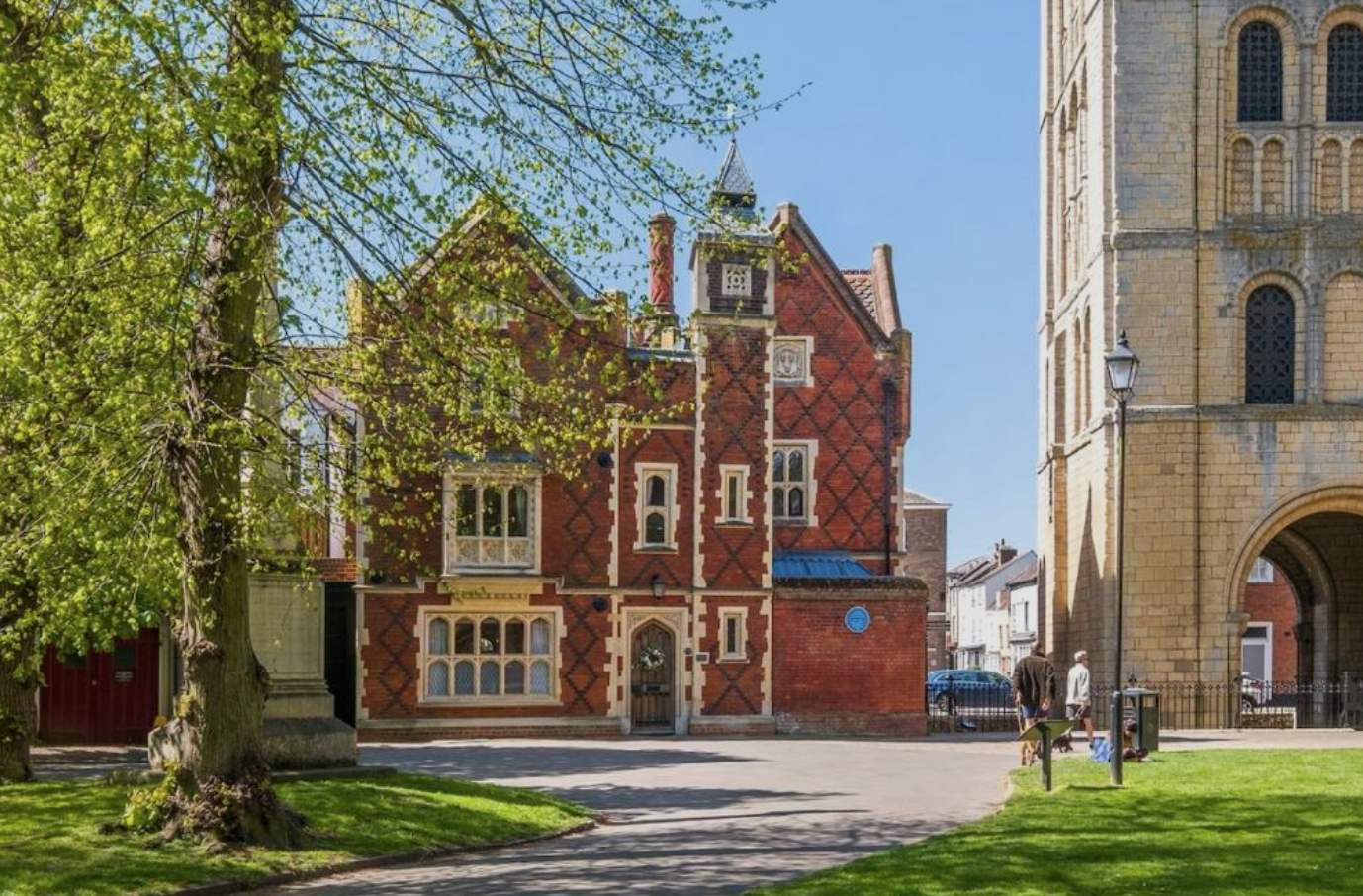
The Medieval Grid of Bury St Edmunds: The Story Behind One of England's Best-Preserved Historic Town Centres
Walk through the heart of Bury St Edmunds on any given morning — past the market stalls on Cornhill, along the sweeping curve of Angel Hill, or down the elegant length of Abbeygate Street — and you are, quite literally, following a path laid out nearly a thousand years ago. The bones of this town were planned with extraordinary precision in the eleventh century, and they remain clearly legible in the streets, plots and spaces you see today.
For anyone thinking of moving to Bury St Edmunds, or simply curious about why this town feels so different from so many other English market towns, the answer lies buried in its medieval past. Understanding the grid is the key to understanding Bury St Edmunds — and why living here continues to feel so special.
Abbot Baldwin and the Birth of a Planned Town
Most English towns grew organically. Streets followed cattle tracks, rivers, or the path of least resistance. Bury St Edmunds did not. In the decades following the Norman Conquest of 1066, Abbot Baldwin — a physician from Chartres who served as personal doctor to Edward the Confessor before becoming Abbot of Bury — set about creating something genuinely remarkable: a deliberately planned urban settlement laid out on a formal grid.
Baldwin's vision was both spiritual and commercial. The town existed to serve St Edmund's Abbey, one of the wealthiest and most powerful Benedictine monasteries in medieval England, and to accommodate the enormous number of pilgrims who travelled to venerate the shrine of St Edmund, the martyred King of East Anglia. But Baldwin understood that pilgrims needed feeding, housing and supplying — and that trade and commerce would flourish if the town was properly organised.
The result was a grid of streets, plots and open spaces that was, for its time, a masterpiece of urban planning. Scholars of medieval urbanism have long recognised Bury St Edmunds as one of the finest surviving examples of a planned Norman town in the whole of England.
How the Grid Was Designed
The genius of Baldwin's plan lay in its logic. The grid was orientated around two principal axes — one running north to south, one east to west — with the Abbey and its precinct forming the sacred heart from which everything else radiated.
Burgage plots — the standard unit of medieval urban property — were laid out in regular, uniform strips along each street. Each plot had a narrow frontage onto the street and extended back in a long, thin rectangle, maximising the number of traders and residents who could occupy a prime position. This pattern is still visible today if you look carefully at the property boundaries and building widths along streets like Abbeygate Street and Guildhall Street.
Market spaces were generous and strategically placed. The town needed to accommodate large numbers of visitors, traders and pilgrims, and the open spaces at Cornhill and the Buttermarket reflect this original intention. Angel Hill, the great open space immediately in front of the Abbey Gate, served as both a processional approach to the Abbey and a gathering place for the town's commercial and civic life.
Connections between the sacred and the commercial were carefully managed. Streets like Abbeygate Street and Churchgate Street formed direct, processional routes between the market areas and the Abbey precinct, ensuring that pilgrims moving through the town would pass through its commercial heart — a medieval piece of town planning that was as economically astute as it was spiritually motivated.
The Streets You Walk Today
One of the most extraordinary things about Bury St Edmunds is how faithfully the medieval street pattern has survived. While individual buildings have been rebuilt, refaced and extended across the centuries — many of the Georgian and Victorian façades you admire today conceal medieval timber frames and foundations behind them — the streets themselves follow their original eleventh-century alignments almost without deviation.
Consider some of the town's most familiar streets:
Abbeygate Street — the principal commercial artery running from the market to the Abbey Gate, exactly as Baldwin intended
Churchgate Street — the ceremonial approach to the Cathedral and Abbey precinct
Guildhall Street — home to civic and administrative functions since the medieval period
Hatter Street and Crown Street — part of the secondary grid, their names hinting at the specialist trades that once occupied them
St John's Street — extending the grid southwards, lined with some of the town's finest Georgian townhouses
Angel Hill — the great set piece of the medieval plan, still one of the most beautiful urban spaces in Suffolk
Walk these streets with the grid in mind and the town reveals itself in a completely new way. The regularity of the plot widths, the rhythm of the building lines, the way streets terminate at significant landmarks — all of it speaks to a plan conceived with remarkable clarity nearly a millennium ago.
What the Grid Means for Life in Bury St Edmunds Today
The medieval grid is not merely a historical curiosity. It is the reason Bury St Edmunds works so well as a place to live in the twenty-first century.
Walkability That Cannot Be Replicated
Because the town was designed for pedestrians — pilgrims on foot, traders pushing carts, residents walking to market — the historic centre is naturally compact, connected and walkable. Everything is within easy reach. The Cathedral, the Abbey Gardens, the market, independent shops, restaurants, cafés, schools and community spaces are all woven into a tight, legible network of streets that rewards walking and makes car dependency largely unnecessary for daily life.
This is not something that can be designed into a new development. It is the product of nine centuries of continuous use and incremental adaptation of a fundamentally sound original plan.
Independent Businesses and a Thriving Economy
The burgage plot system that Baldwin introduced created a commercial culture of small, independent businesses — and that culture has never really left. The narrow-fronted shops along Abbeygate Street and the Traverse are a direct physical legacy of the medieval plot pattern, and they continue to attract the kind of independent retailers, restaurants and artisan businesses that make a town centre genuinely interesting to live in.
The twice-weekly market on Cornhill and the Buttermarket, one of the oldest in Suffolk, is another direct continuation of the medieval commercial tradition. Bury St Edmunds consistently ranks among the best market towns in England, and the medieval grid is a significant reason why.
Cultural Life and Community
The Abbey Gardens, the Cathedral, the Theatre Royal (the only surviving Regency theatre in England), the Greene King Brewery, the Arc shopping centre and a calendar of festivals and events throughout the year all contribute to a cultural offer that is genuinely exceptional for a town of this size. Much of this richness is rooted in the town's medieval heritage and the physical framework the grid provides.
Living in the Historic Centre: Property and Character
For buyers seeking a home with genuine character and a sense of place, the historic centre of Bury St Edmunds offers something that is increasingly rare and increasingly valued.
Properties within the Conservation Area range from listed Georgian townhouses on Angel Hill and Westgate Street to period cottages tucked into the secondary streets of the grid, Victorian terraces that followed the same plot patterns as their medieval predecessors, and converted buildings that bring new uses to historic fabric. Many properties conceal far greater age and interest than their outward appearance suggests — a Georgian front door may open into rooms with medieval timbers, Tudor brickwork, or Stuart panelling.
Listed building status and Conservation Area designation mean that the character of the historic centre is protected for the long term — one of the reasons that period properties here command enduring demand and strong values.
Buyers are drawn to the historic centre for a combination of reasons that are difficult to find elsewhere:
Authenticity — streets and spaces with genuine history and a legible sense of place
Walkability — everything within easy reach on foot
Community — a town centre that people actually use, with markets, events and independent businesses
Schools — access to some of Suffolk's most highly regarded schools
Architecture — buildings of real character, quality and craftsmanship
Investment — historic properties in well-established Conservation Areas have a track record of holding and growing their value
A Town That Rewards Curiosity
One of the pleasures of living in Bury St Edmunds — and one that residents often mention — is the sense that the town continues to reveal itself over time. The more you know about the medieval grid, the more you see it in the everyday fabric of the streets around you. A slightly wider plot here, a medieval lane surviving as a modern alleyway there, a building line that steps back to respect a boundary established in the eleventh century.
This is a town with layers. And those layers make it endlessly interesting to live in.
Thinking of Making Bury St Edmunds Your Home?
Whether you are relocating to the area, upsizing, downsizing, or simply beginning to explore what Bury St Edmunds has to offer, understanding the town's history is a genuinely useful starting point. The medieval grid is not background detail — it is the reason the town is laid out the way it is, the reason it feels the way it does, and a significant part of the reason that living here is so consistently rewarding.
At Matthew Chapman Property, we are proud to work in one of England's most remarkable historic towns. As an independent residential property advisor serving Bury St Edmunds and the surrounding Suffolk villages, Matthew brings genuine local knowledge to every instruction — from period cottages in the Conservation Area to family homes across the wider town.
If you would like an honest conversation about the Bury St Edmunds property market, or simply want to find out more about what different parts of the town have to offer, we would be delighted to hear from you.
Call us on 01284 333 297, email matthew.chapman@theagencyuk.com, or visit matthewchapmanproperty.co.uk to find out more.